MEET THE WORLD’S FASTEST LAND ANIMAL
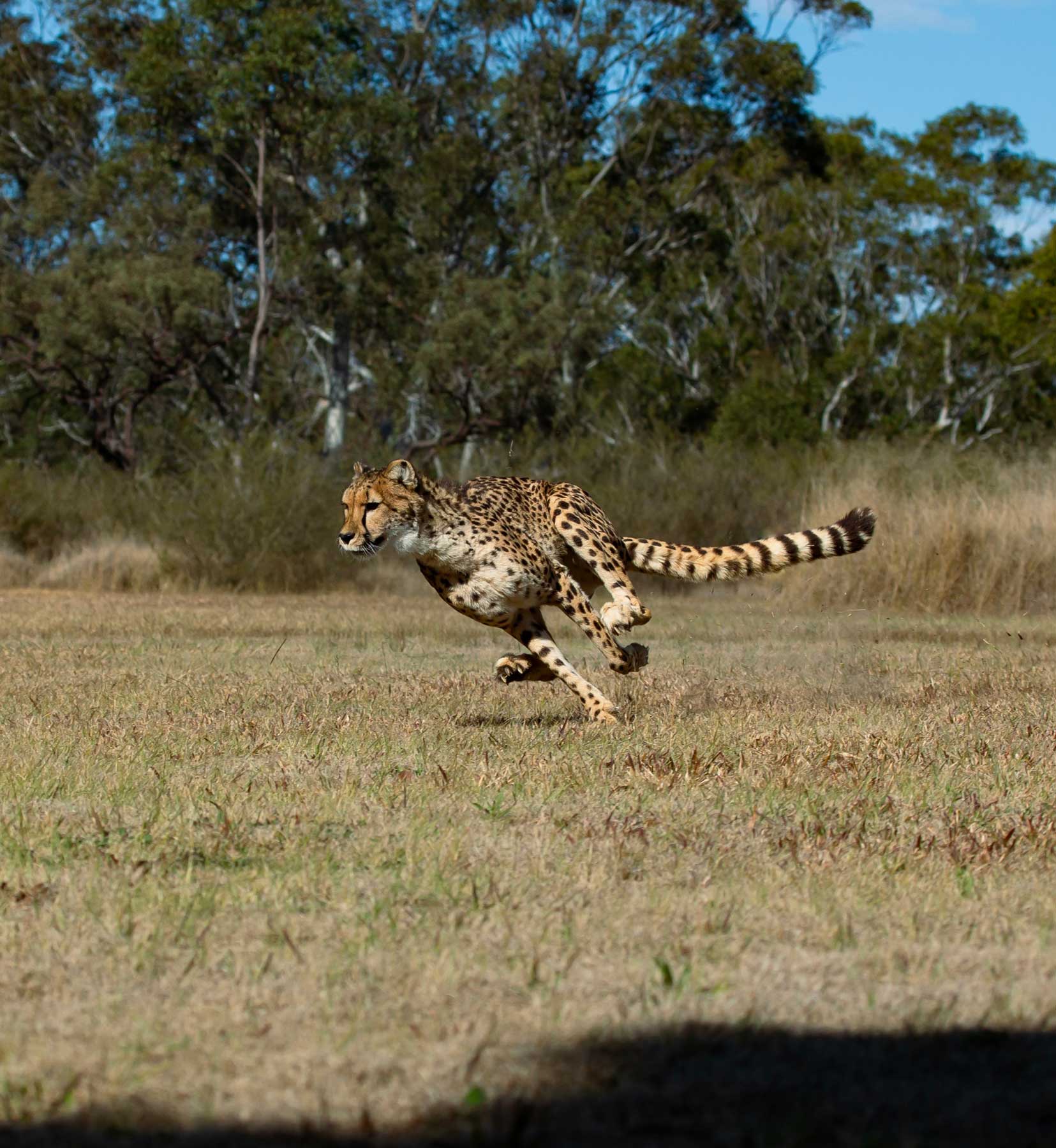
The cheetah has a slender, long-legged body with blunt semi-retractable claws, providing traction when running at top speed. The pads are quite hard, which also allows them to grip when running at high speeds.
Its coat is tan with small, round black spots and the fur is coarse and short. The black fur actually grows out of black spots on the cheetah’s skin and is slightly longer and softer than the tan fur, which provides the cheetah with a slightly three-dimensional outline when camouflaging.
The cheetah has a small head with high-set eyes. Black “tear marks”, which run from the corner of its eyes down the sides of the nose to its mouth, help keep the sun out of its eyes and aid in hunting by reducing glare when hunting during the day.
CHEETAH FAST FACTS
Scientific Name:
Acinonyx jubatus
Conservation Status:
Vulnerable
(Critically Endangered in North Africa and Asia)
Wild Population:
Fewer than 7,000
Body Length:
112–135 cm
Weight:
28–60 kg
Gestation:
Around 95 days
Number of Young:
1–8 cubs
Footprint Size:
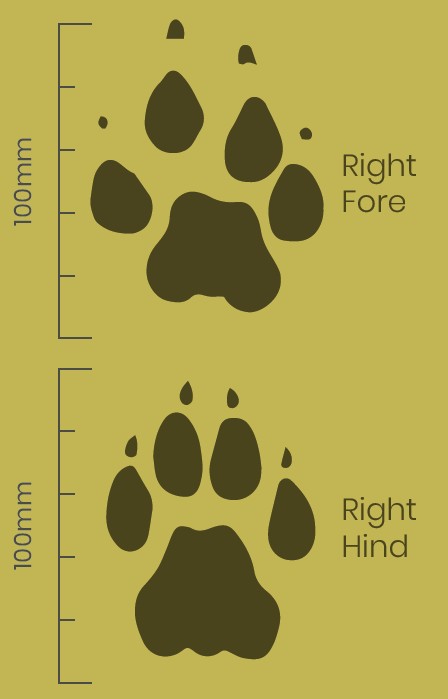
Approx. 100 mm (fore and hind)
Habitat:
Grasslands, savannahs, dense vegetation and mountainous terrain. Home ranges can extend beyond 1,000 km².
Distribution:
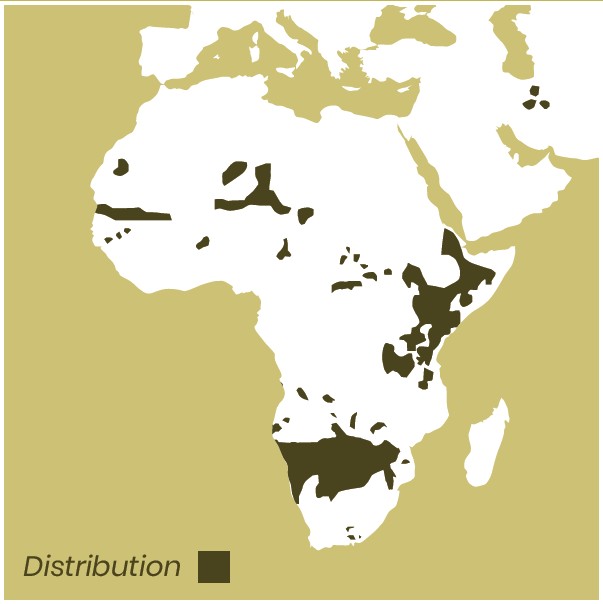
Once found across Africa and Asia, the cheetah’s range is now reduced to fragmented populations, with the highest numbers in Namibia and Botswana. A small population of approximately 50 cheetahs remains in Iran.
DIET
Small antelope such as impala, gazelle and steenbok, as well as the young of larger antelope, warthog, hare and game birds.
Cheetahs have also been known to pull down ostriches and even larger prey such as wildebeest.
BEHAVIOUR
Covering 7–8 metres in a single stride, with only one foot touching the ground at a time, the cheetah can reach speeds of up to 110 km/h in around 3 seconds.
Cheetahs mostly hunt during the day, often in the late morning and early evening. They stalk their prey until it is within 10–30 metres before chasing and tripping it with their dewclaw.
THREATS
Decline in prey, loss of habitat, poaching and indiscriminate trapping and shooting all threaten the survival of the cheetah throughout its remaining range.