MEET THE ACROBATIC CARACAL
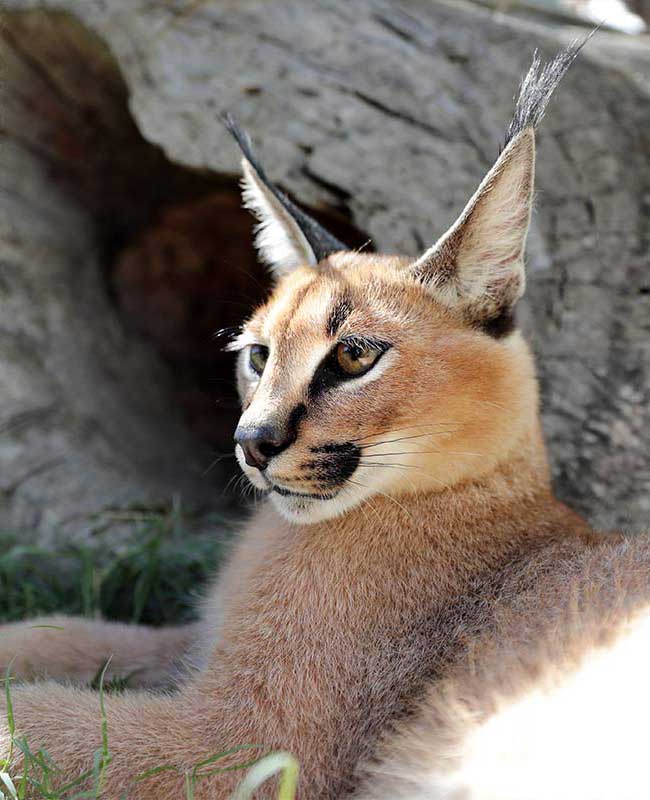
Caracals have short, reddish-brown fur on their back and flanks, set off by white fur on the chin, throat and belly. Their most distinctive feature is the long black ear tufts that sit on top of their long, slender ears.
There are many theories about the function of these ear tufts. They may help keep flies out of the caracal’s face or help camouflage the cat in tall grass by breaking up the outline of the head. The most widely accepted theory is that caracals twitch their ear tufts to communicate with each other.
CARACAL FAST FACTS
Scientific Name:
Caracal caracal
Conservation Status:
Least Concern
Body Length:
83–123 cm (including tail)
Weight:
9–18 kg
Gestation:
69–78 days
Number of Young:
1–6
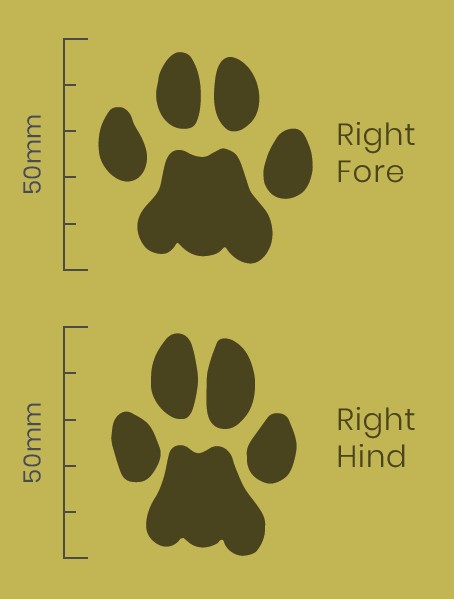
Footprint Size:
Approx. 50 mm (fore and hind)
Habitat:
Woodlands, savannahs and scrub forests, generally avoiding sandy deserts.
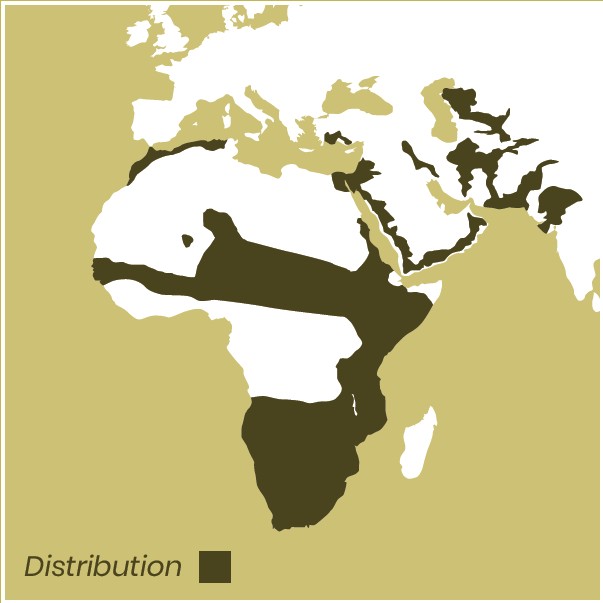
Distribution:
Caracals range across much of the African continent, up through the Arabian Peninsula and into northwest India.
DIET
Primarily birds, rodents and small antelopes.
BEHAVIOUR
Although mainly terrestrial, caracals are excellent jumpers and climbers. They are the fastest felids of their size and can leap up to 3 metres into the air to bring down birds such as guinea fowl on the wing.
Their hunting style is very distinctive: they use both front paws independently to strike, sometimes catching multiple birds from the air at once. Like the rest of the small cats, caracals may purr when content and make a variety of meows, growls and hisses to express their mood.
THREATS
Caracal populations are dropping rapidly as a result of conflict with humans. Greater understanding of caracal populations and improved strategies for coexistence with people are essential for their long-term survival.