MEET THE ELEGANT & HIGH-JUMPING SERVAL
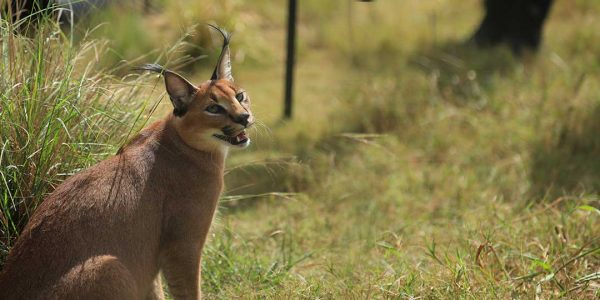
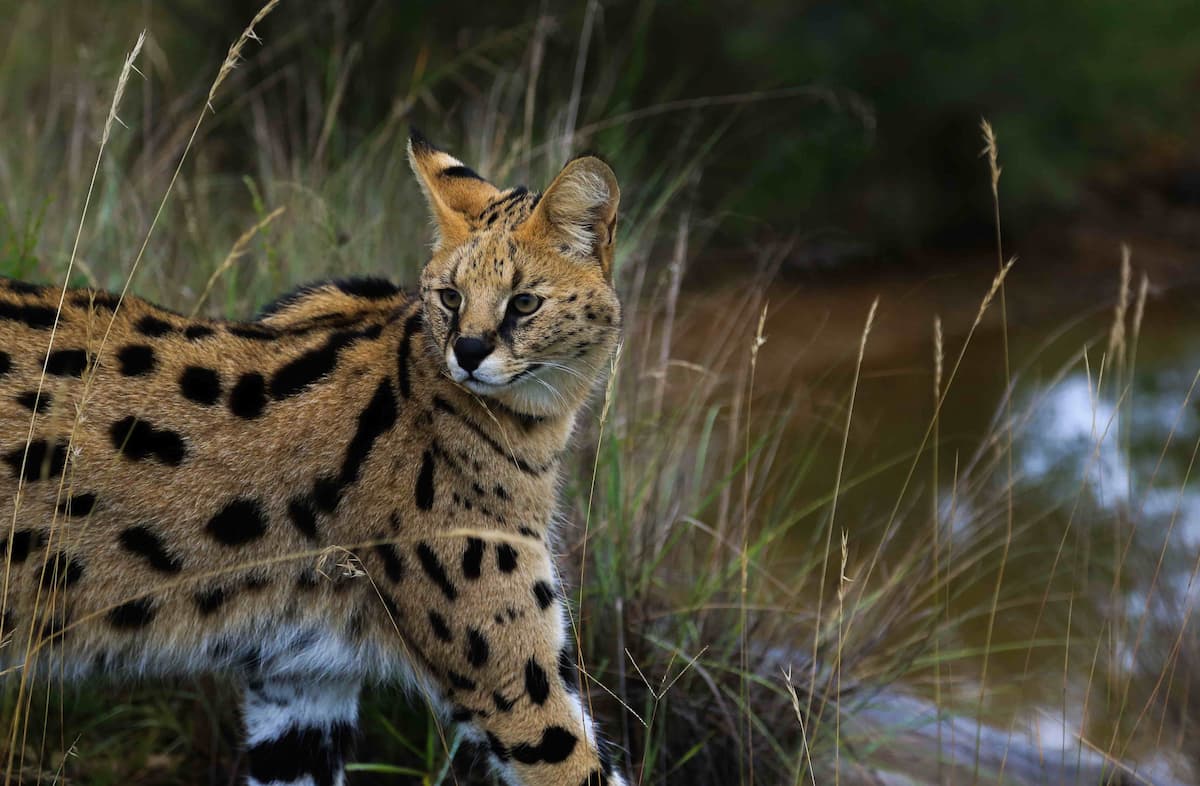
Servals have an elongated neck, very long legs, and large ears on a small, delicate skull. Their coat is pale yellow with bold black markings that either appear as large spots or merge into stripes on the neck and back. The underside is whitish-grey or yellowish.
Their skull is more elongated than most cats. Their ears are broad based, set high on the head and very close together, with black backs and a striking white eyespot. Their tail is relatively short—only about one third of their body length—and ringed with black bands.
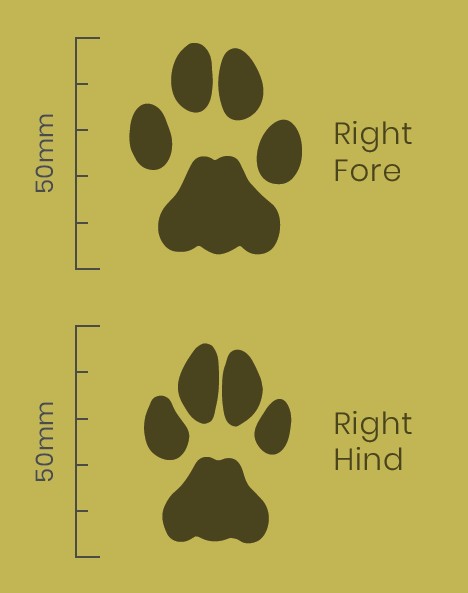
SERVAL FAST FACTS
Scientific Name:
Leptailurus serval
Conservation Status:
Least Concern
Body Length:
59–92 cm
Weight:
12–18 kg
Gestation:
67–79 days
Number of Young:
1–4
Footprint Size:
Approx. 50 mm (fore and hind)
Habitat:
Well-watered savanna long-grass areas, reed beds and other riparian habitats.
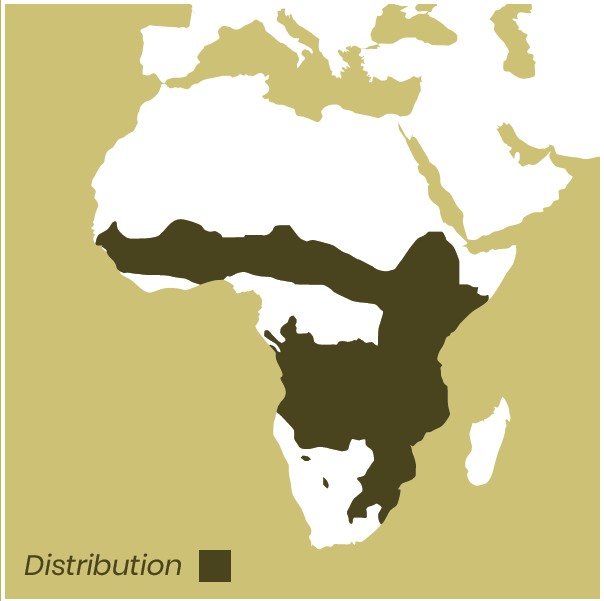
Distribution:
Servals live throughout most of sub-Saharan Africa (except the central rainforest), and in the deserts and plains of Namibia, Botswana and South Africa.
DIET
Rodents, birds, reptiles, frogs, insects and other small species.
BEHAVIOUR
Servals locate prey primarily by sound and make a high leap to strike prey in dense vegetation. They also use vertical leaps to seize birds and insects, clapping their front paws together mid-air. They can leap up to 3 m vertically and have a hunting success rate of 50%, far higher than most cats.
THREATS
Servals face conflict with humans, often hunted by farmers when they prey on poultry and poached for their pelts.