MEET THE REMARKABLE & WATER-LOVING FISHING CAT
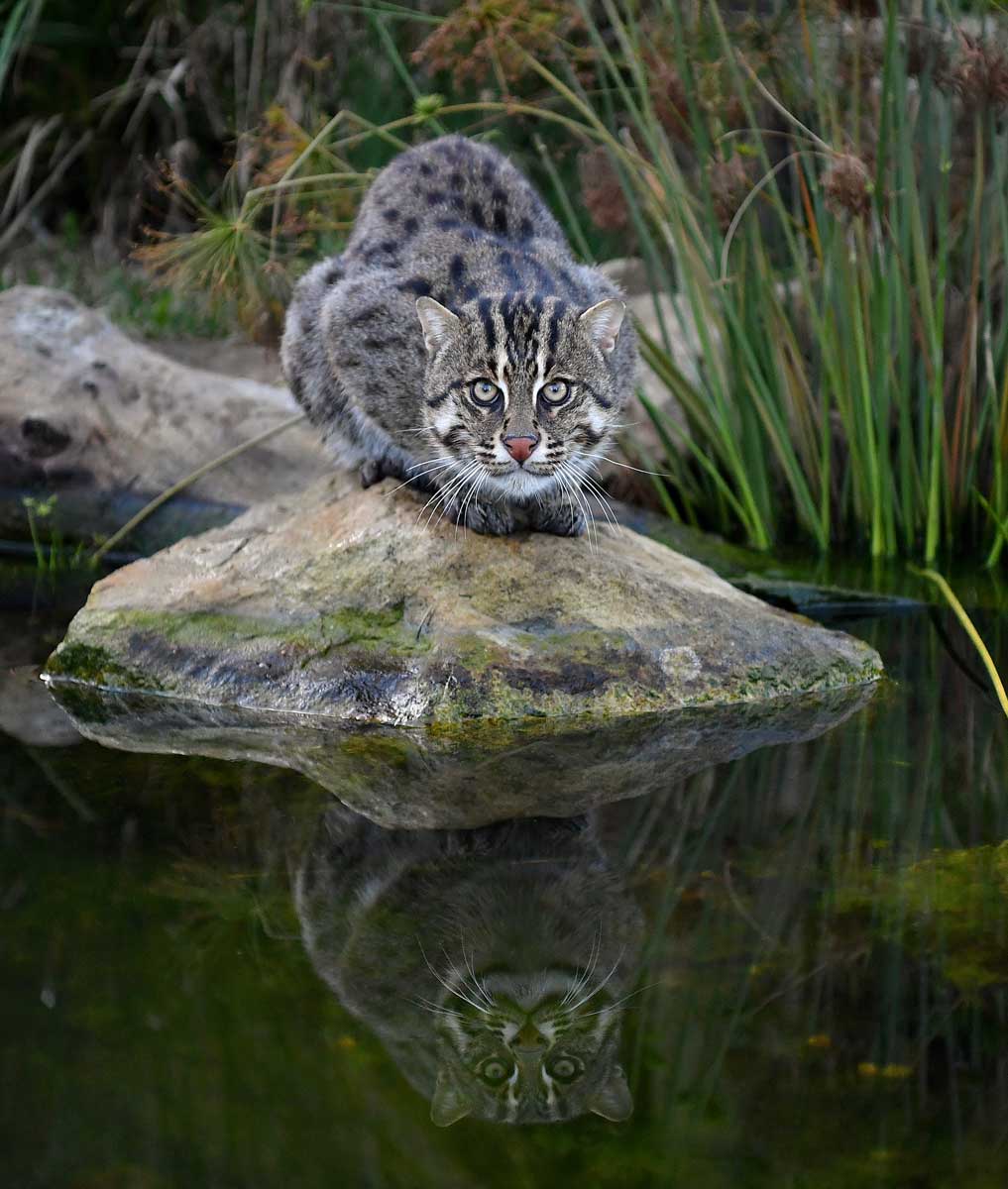
The fishing cat’s coat is camouflaged grey-brown with distinctive black spots and stripes. Their cheeks have white highlights and black marks, and their eyes are ringed with white fur. Their ears are short and round with black backs and a single white spot visible from the front.
Compact and powerfully built, fishing cats have short limbs and a stocky body. Their head is round and elongated, and unlike many cats, they readily swim. Partially webbed front toes and claws that protrude slightly even when retracted make capturing prey underwater much easier.
A dense, compact underlayer of fur prevents water from reaching the skin, keeping the fishing cat warm in cold water environments.
FISHING CAT FAST FACTS
Scientific Name:
Prionailurus viverrinus
Conservation Status:
Vulnerable
Body Length:
80–115 cm (incl. tail)
Wild Population:
< 10,000
Weight:
6–16 kg
Gestation:
63–70 days
Number of Young:
1–4
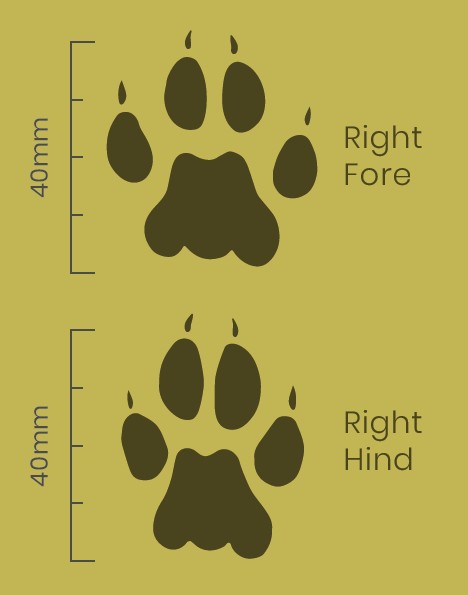
Footprint Size:
Approx. 40 mm (fore and hind)
Habitat:
Primarily found in densely vegetated waterways such as marshes, mangrove swamps and thickets.
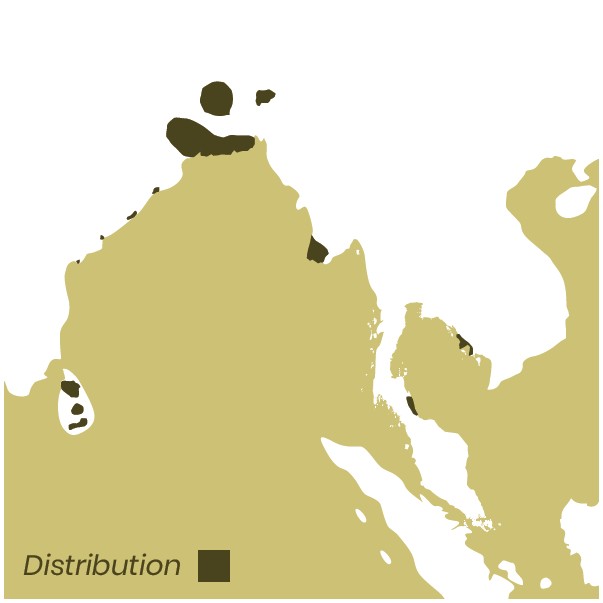
Distribution:
Found across Southeast Asia — including Sri Lanka, India, Bangladesh, and small fragmented populations in Vietnam and surrounding regions.
DIET
They feed on small mammals, fish, reptiles and frogs — anything within their prey size.
BEHAVIOUR
Primarily crepuscular or nocturnal. Very little is known about the social behaviour of wild fishing cats, though they are likely solitary except during breeding or raising young.
THREATS
Fishing cats face major threats through wetland habitat destruction, human conflict over livestock, and poaching for bushmeat.